Entering Belize
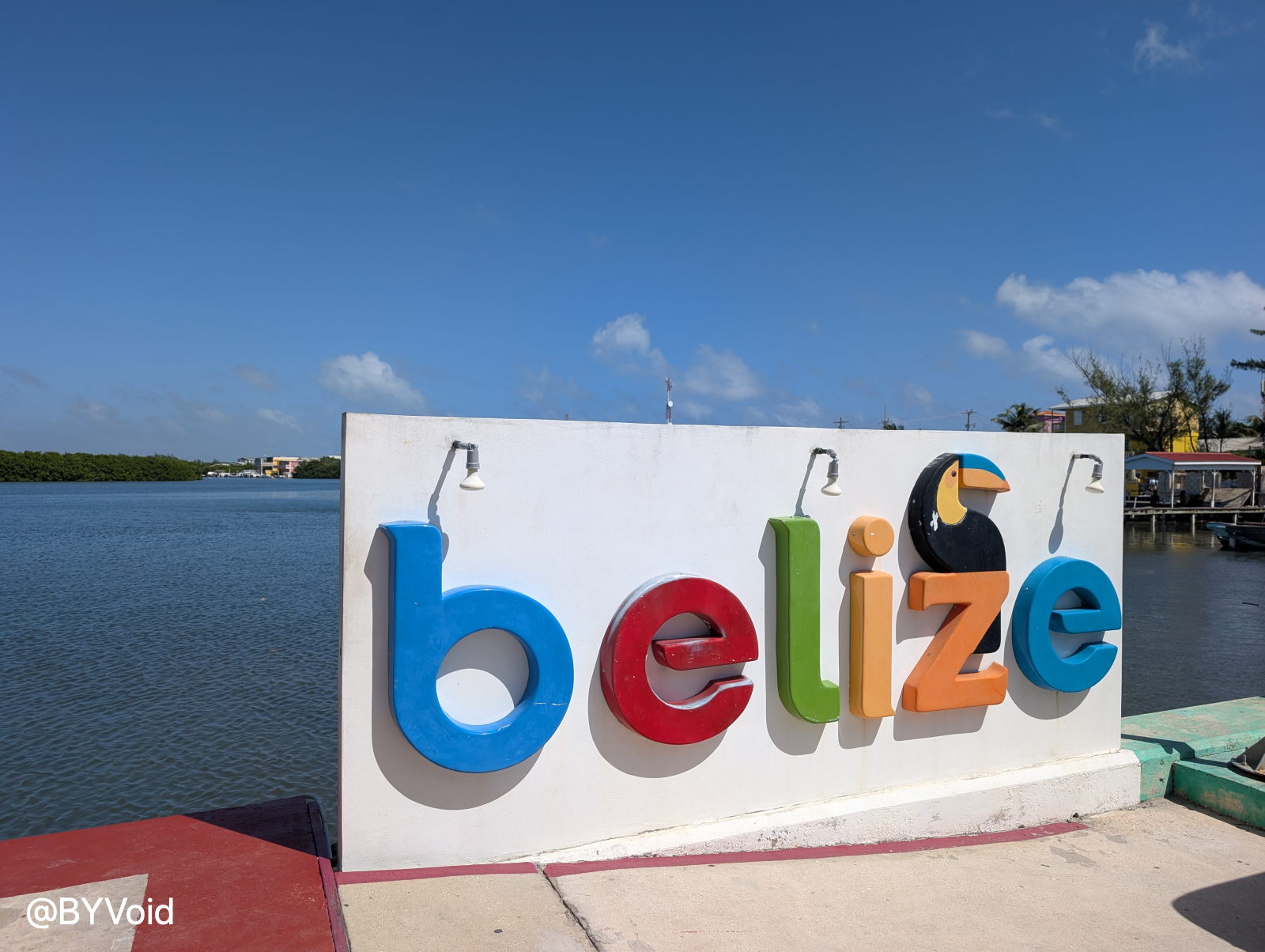
After the international ferry from Chetumal, Mexico arrived at the port of San Pedro, all passengers had to disembark. About half of the travelers, including myself, had San Pedro as their destination, while the rest would continue on the same boat to Caye Caulker in Belize. Upon disembarking, the first thing that caught my eye was the colorful “belize” letters wall. I’ve noticed that almost all cities in Latin America, regardless of size, like to build these letter walls as photo spots for tourists. This is despite the fact that Belize is not strictly part of “Latin America,” as its official language is English, having formerly been the British colony of “British Honduras.”
The immigration checkpoint in San Pedro is small, even appearing somewhat rudimentary. However, all passengers lined up together to process their entry, and the whole process was quite smooth. The border official checked my passport and stamped it without any extra hassle or confusion. Overall, the border officials in various American countries have been fairly reliable, reflecting that the power of their central governments is reasonably effective (the Mexican side of the US-Mexico border might be an exception).
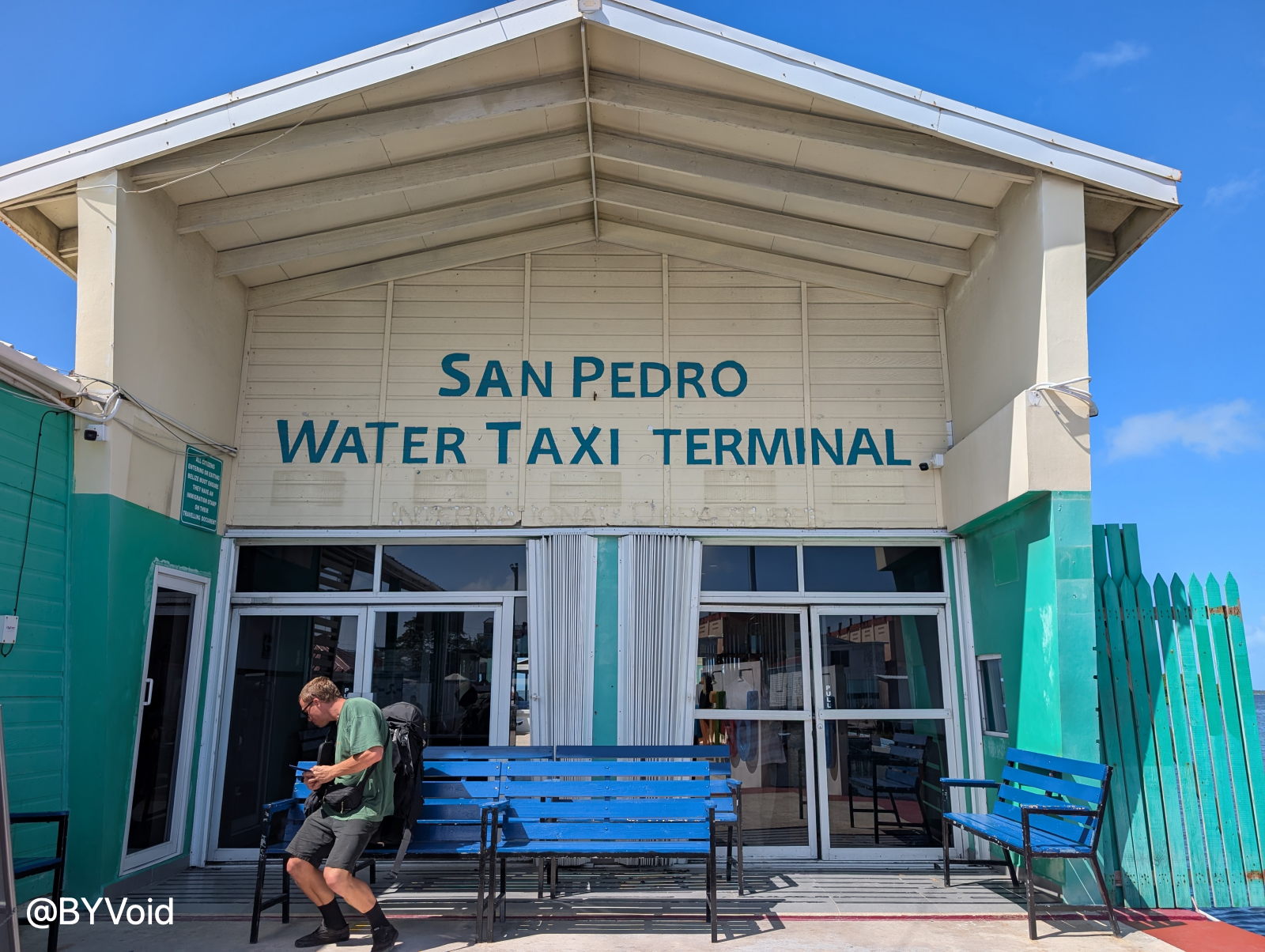
Upon entering Belize, I immediately felt a sharp difference from Mexico. Compared to Mexico, which is predominantly Mestizo, the physical features of the people here are somewhat different. Although still mixed, the most common appearance I saw was that of people of African descent. These individuals might have come from other British colonies in the Caribbean, being descendants of mixed heritage between enslaved Africans and the indigenous Maya. Additionally, there are many immigrants from all over the world here, with people of Indian descent being the most prominent.
San Pedro
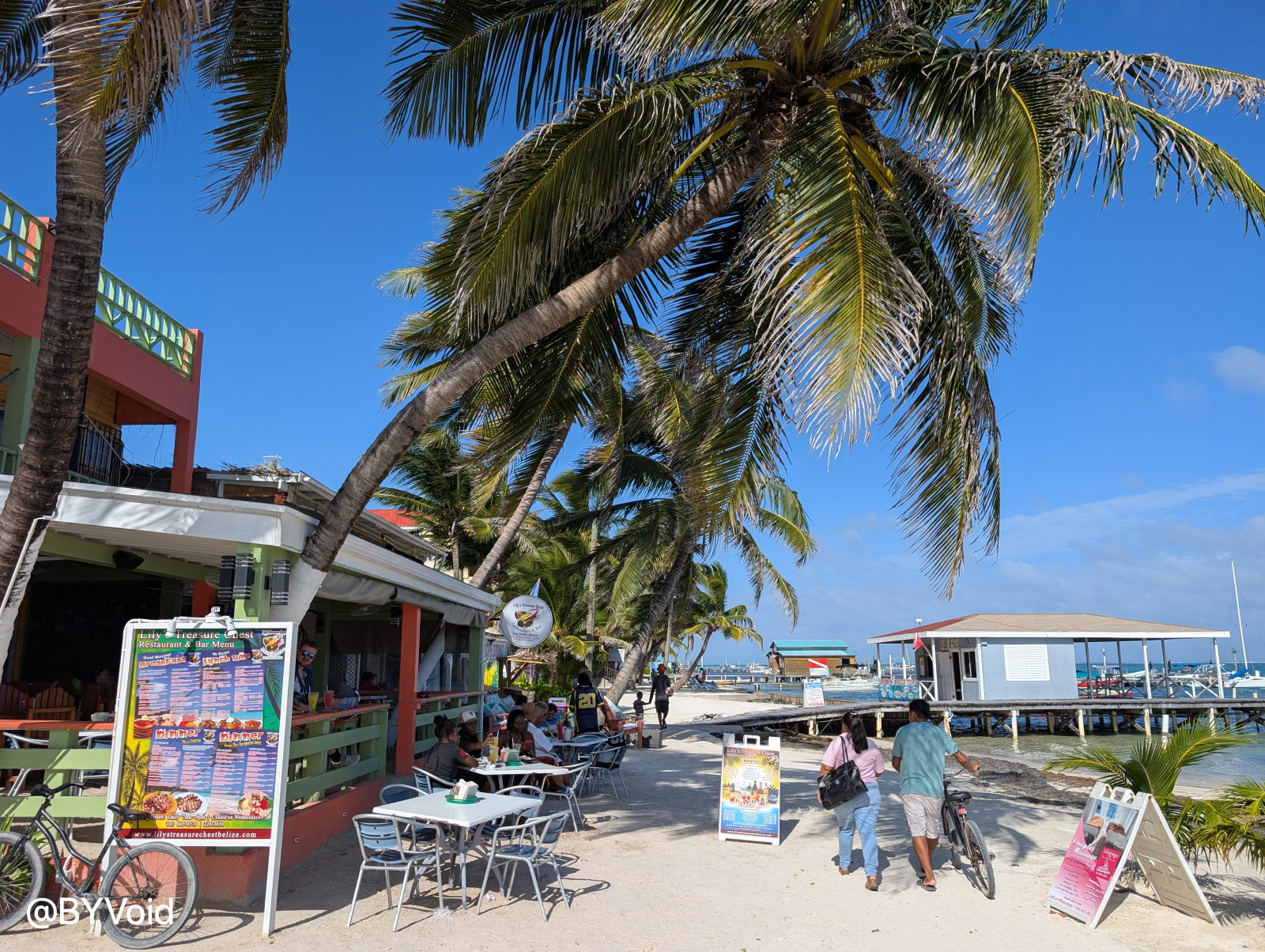
The cityscape of San Pedro resembles a typical small town in a Caribbean island nation: intense sunshine, a lazy atmosphere, and a certain kind of unique dilapidation. The town is situated on a narrow strip of land with the sea on both sides: to the west is the small bay of San Pedro, and to the east, it faces the vast Caribbean Sea directly. The core area of the town is very small, and the main streets can be explored entirely on foot.
I arrived here after noon, so I decided to find a place for lunch. Although San Pedro is east of the Yucatán Peninsula, it is one hour behind Chetumal, so the local time was exactly 12:00 PM. As a town centered on tourism, the variety of restaurants here is much richer than in Chetumal. I randomly walked into a restaurant called Elvi’s Kitchen and ordered a Caribbean specialty, stewed chicken, served with gravy, rice and beans, fried plantains, and vegetables. It tasted delicious.
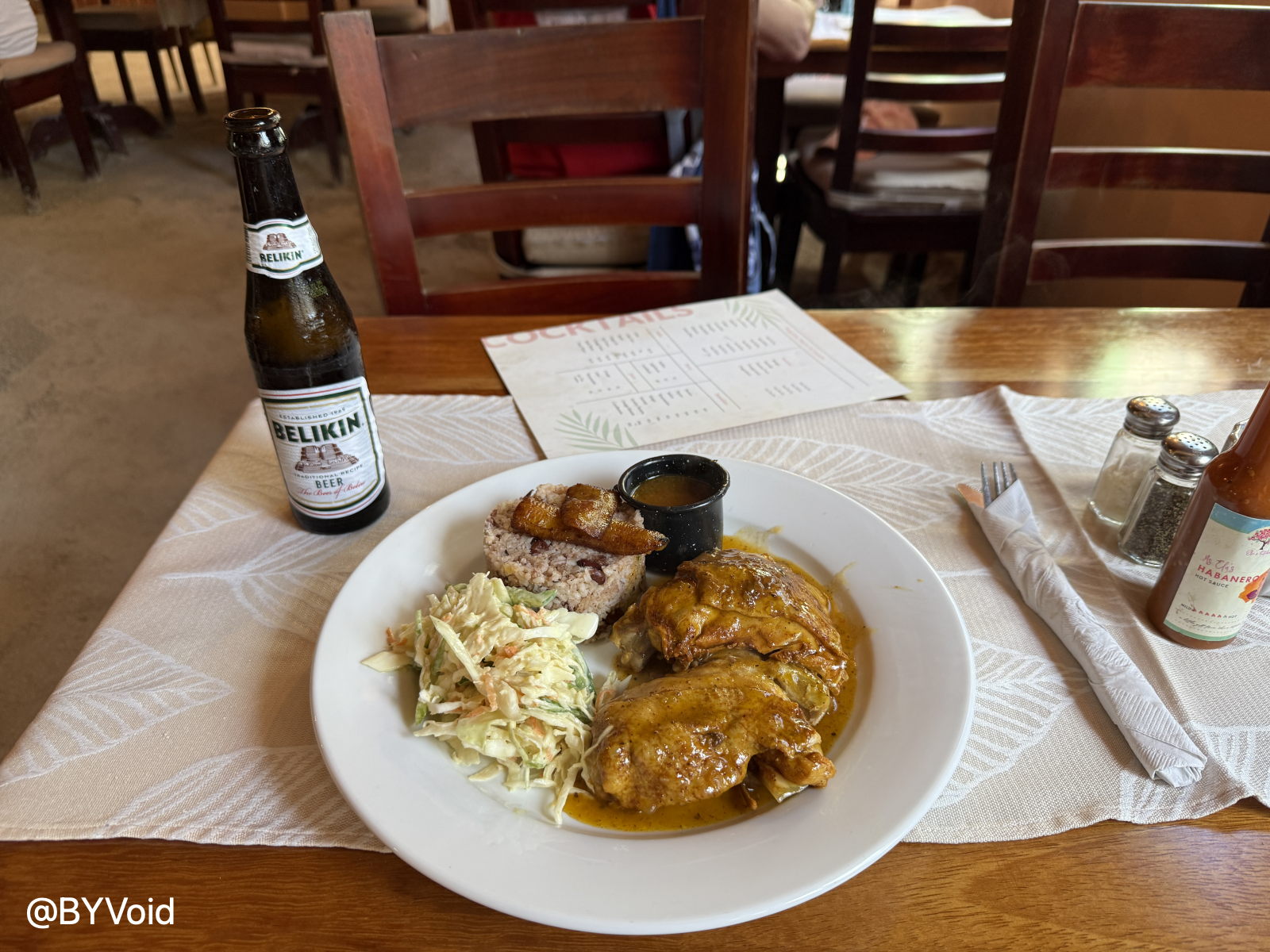
The price for this lunch (20 Belize Dollars) was also reasonable, cheaper than I had expected. I also ordered a local beer for 7 Belize Dollars. The local currency, the Belize Dollar (BZD), is pegged to the US Dollar at a fixed rate of 1 USD to 2 BZD, making conversions very simple. In San Pedro, a bottle of water generally costs between 0.5 to 1 USD (1 to 2 BZD). In terms of accommodation, an ordinary guesthouse can be found for a few dozen dollars. Prices here are a bit more expensive than in Mexico but cheaper than many Caribbean island nations. Considering that Belize has almost no industry and very limited agriculture, all goods rely on international trade imports. Coupled with a sparse population, a small market, and no major ports on major shipping routes, logistics costs are naturally high. Therefore, my initial expectation for the cost of living here was actually quite high, roughly equivalent to other Caribbean islands.
After arriving at the booked guesthouse and dropping off my luggage, I decided to head out and walk around the town to get a feel for the atmosphere of this Caribbean town. The central area of San Pedro town, besides restaurants, supermarkets, and convenience stores aimed at tourists, also features souvenir shops and travel agencies. Beyond that, the main attraction is the beach. The town’s beaches are concentrated on the east side, facing the open Caribbean Sea, and the water is relatively clear. There weren’t too many tourists on the beach; many were leisurely lying on the sand sunbathing. There are also many bars and restaurants next to the beach.
Golf Carts
A unique feature of San Pedro is the golf carts running all over the streets. It’s very interesting; I noticed many as soon as I disembarked. Here, golf carts serve as a lightweight alternative to cars. Not only are they used for personal transport, but there are also freight carts, taxis, and school buses. Almost every shop has such a vehicle parked in front. I finished walking through the core area of San Pedro town quite quickly, so I decided to rent a golf cart to explore further. After checking a few shops, I finally rented one from an owner for 40 USD a day, which included the cost of fuel. They didn’t even check my driver’s license; I’m not sure if there are no local legal requirements for it.
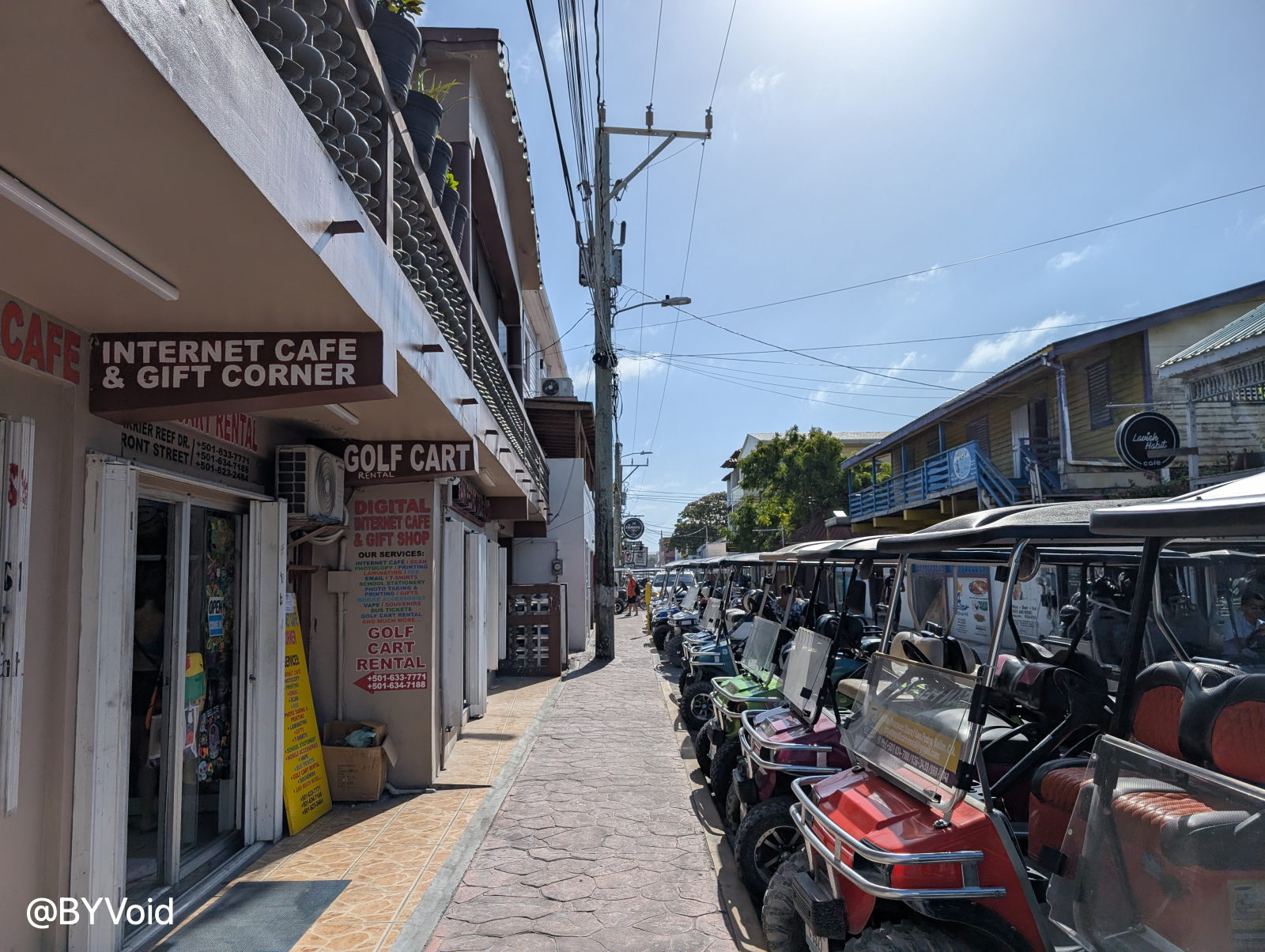
After renting the cart, I began driving out of the town toward more distant parts of the island. The golf cart is open on all sides and has a roof for shade, so it felt quite cool once I started moving. However, there were many golf carts on the road, and it was even congested in many places. After driving for a while, I realized it wasn’t as easy as I had imagined because the roads were quite bumpy and had numerous speed bumps. Since I had already been tossed around on the boat for two hours in the morning, my back was nearly exhausted.
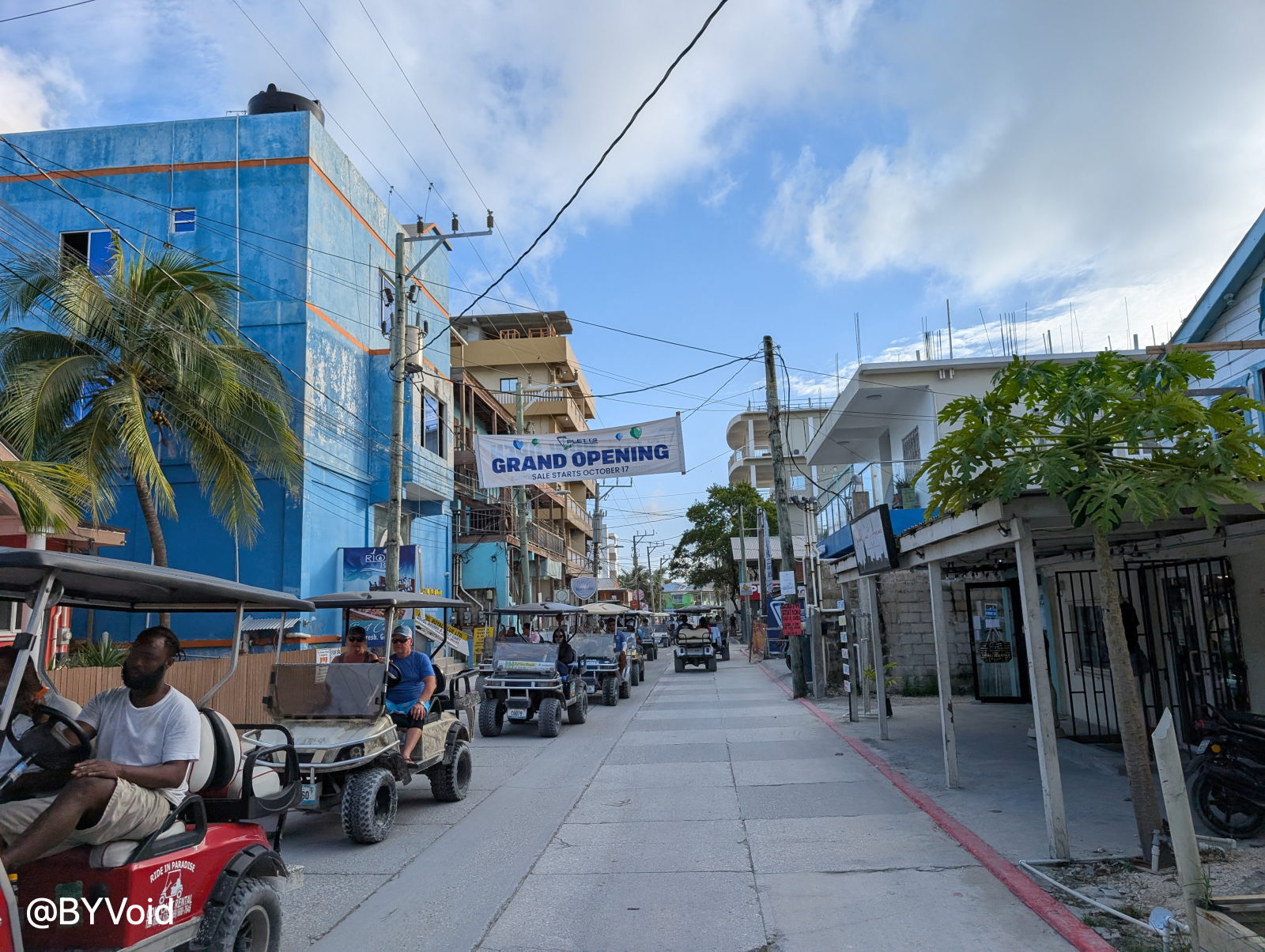
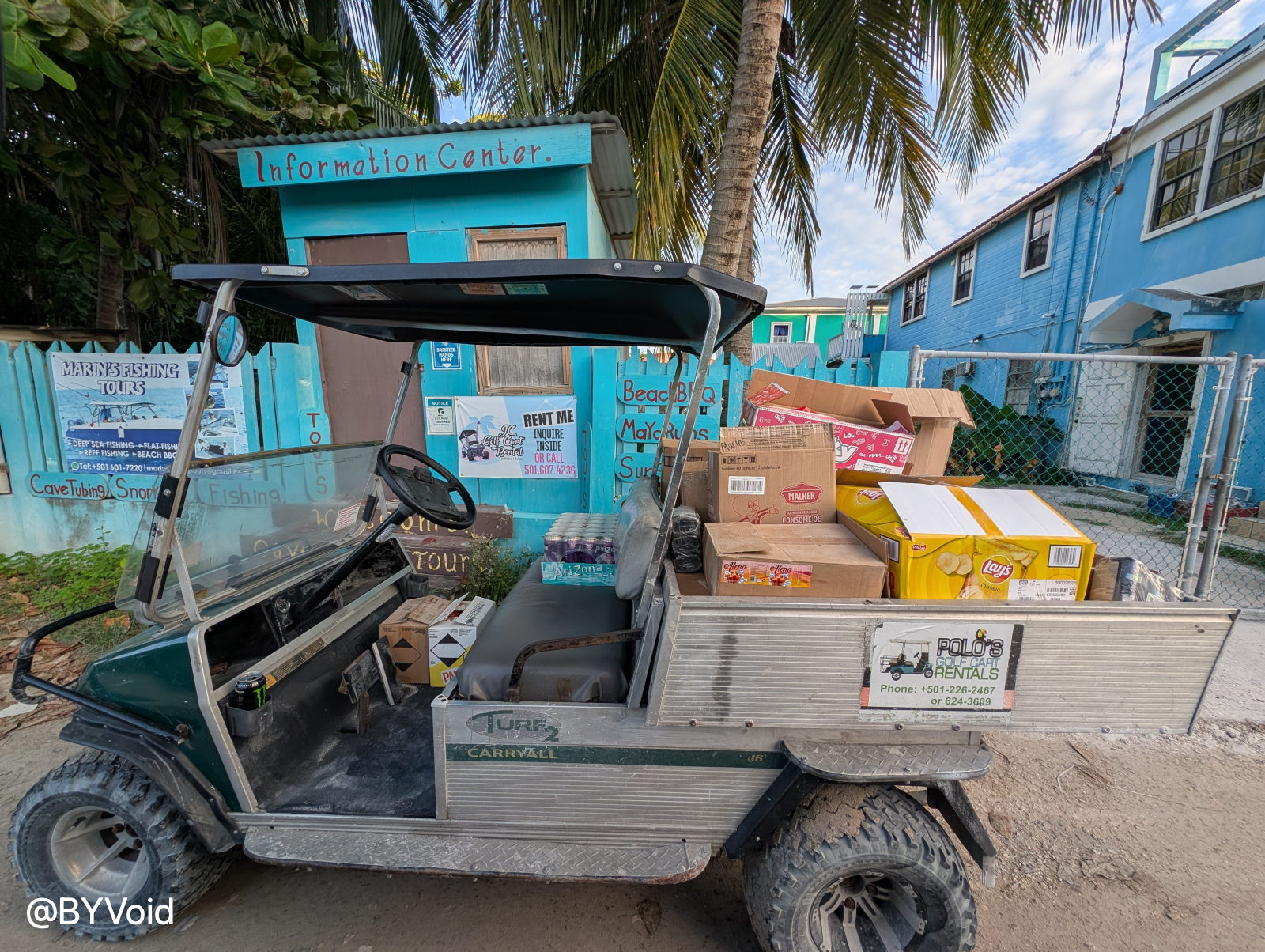
It’s not just tourists driving golf carts; locals rely on them heavily as well. Some carts have even been modified specifically for transporting goods. Passing by a school, I saw a six-seater cart with a dozen children sitting on it, acting as a local school bus.
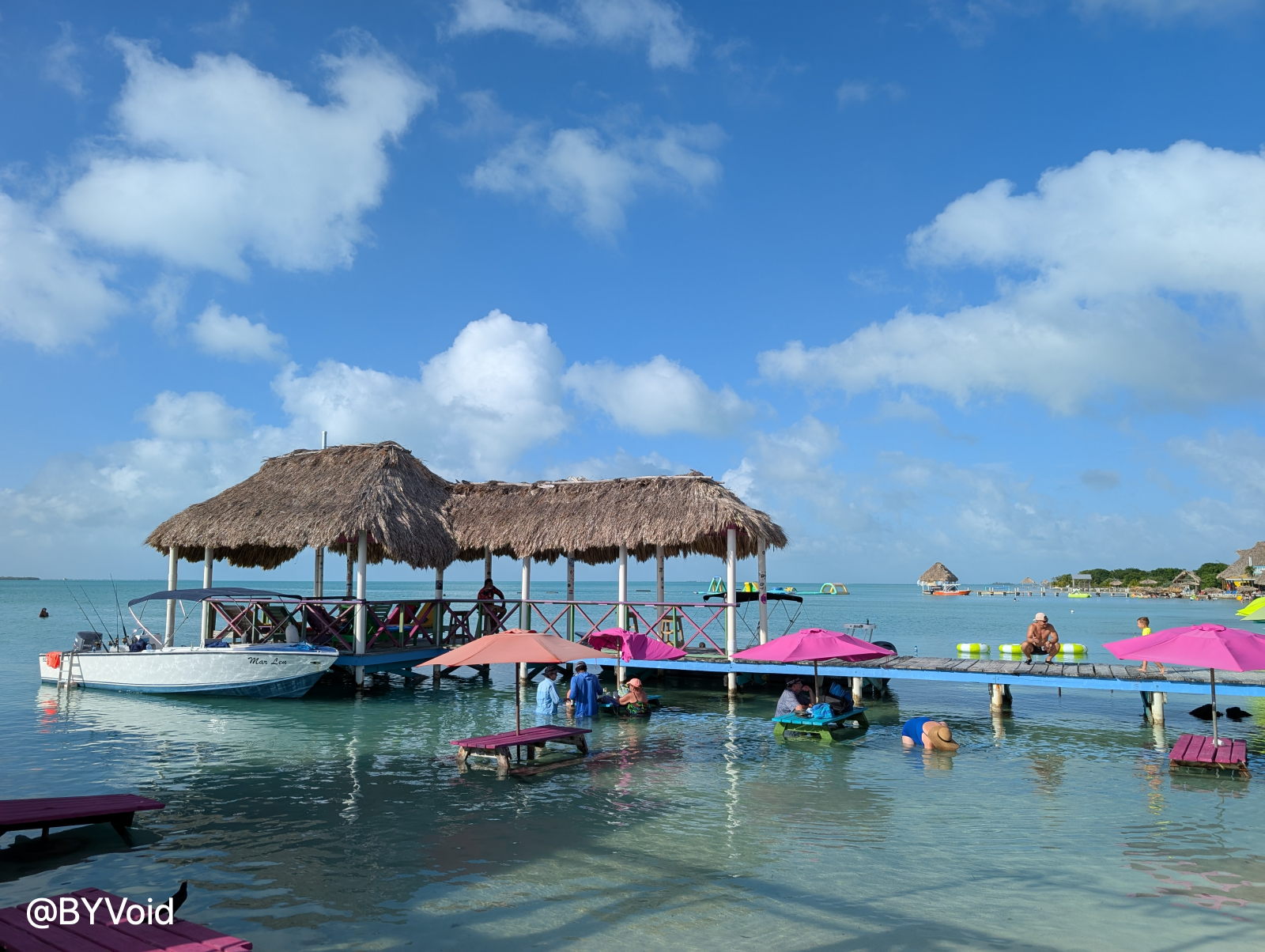
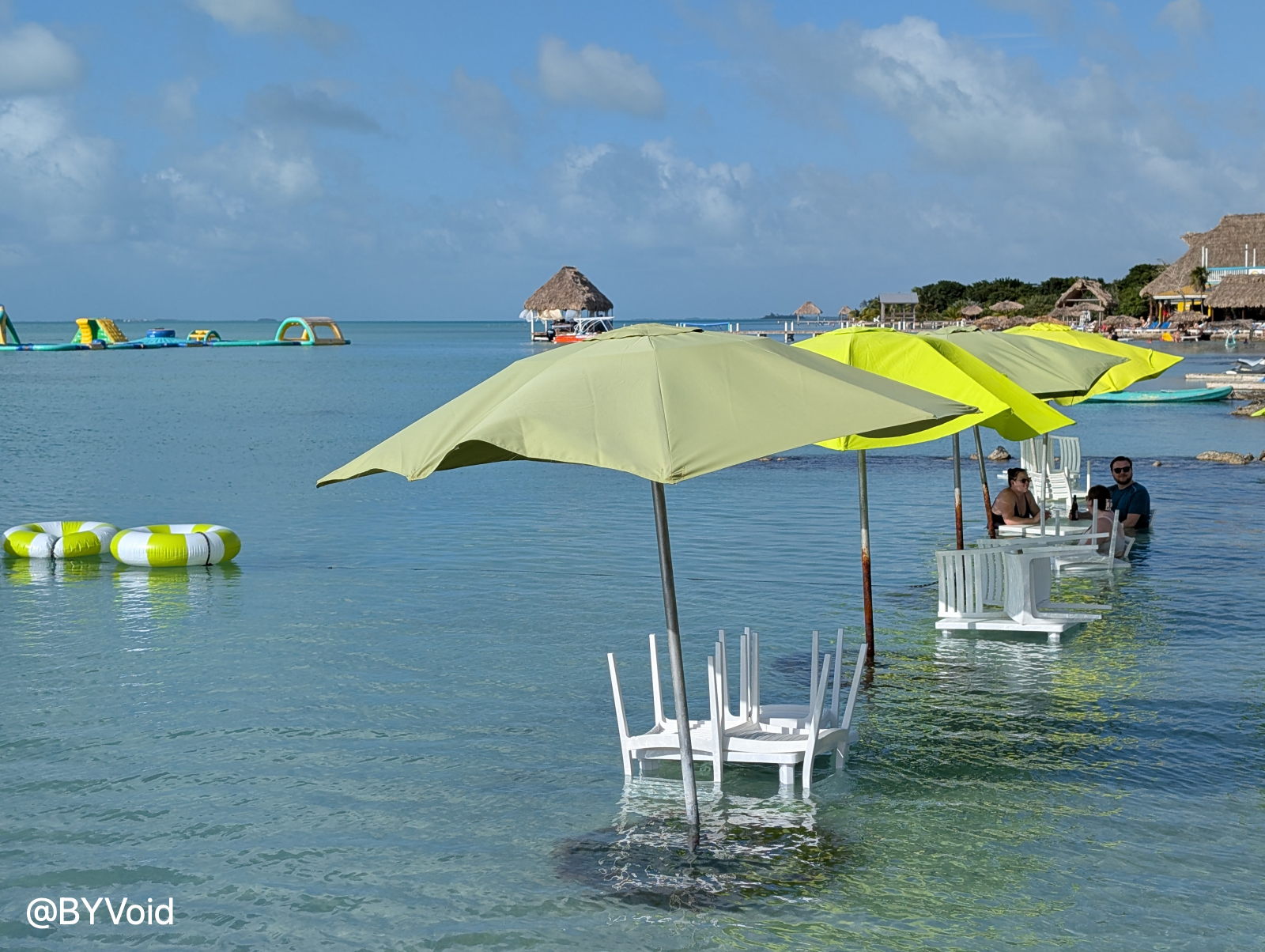
After driving for over thirty minutes on the island’s country roads, I reached Secret Beach in the northwestern part of Ambergris Caye. Facing Chetumal Bay, the water here is relatively calm. Similar to San Pedro, the shoreline is lined with bars and restaurants, and there are even seats and umbrellas in the water, as well as over-water massage services.
Tourism Real Estate Economy
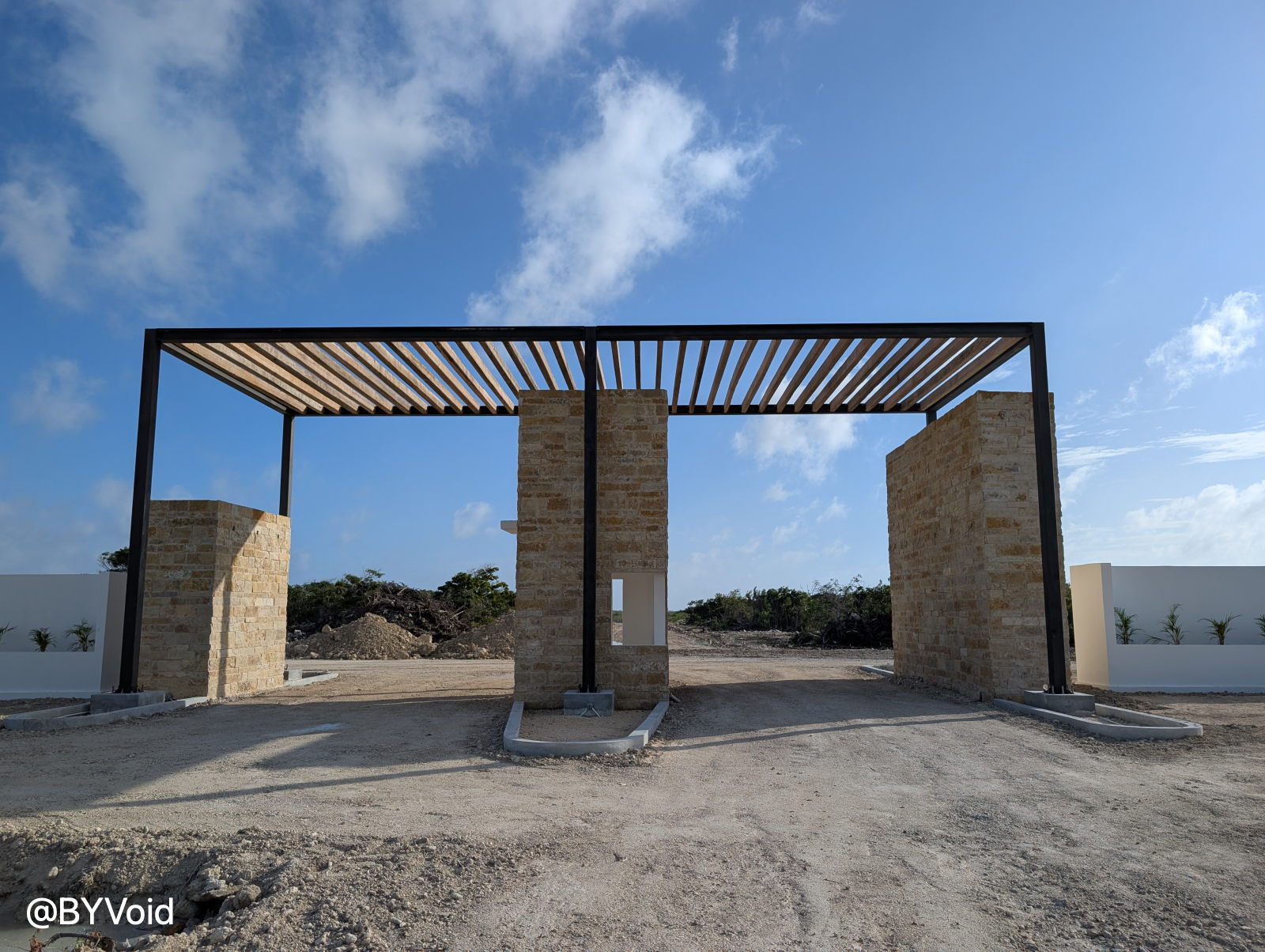
Rather than the pristine scenery, what stands out more on the island are the numerous vacation real estate developments along the road. Along the way, I saw all kinds of real estate advertisements: beachfront condos, standalone houses, and even land for sale for self-built homes, and of course, no shortage of timeshare properties.
From the advertisements, these real estate prices don’t seem particularly high—cheaper ones are around a few tens of thousands of dollars, though there are also multi-million dollar luxury homes. But in my opinion, these prices don’t fully reflect the carrying costs and seem more like a commercial trap. First, real estate liquidity here is low; it’s easy to buy but hard to sell. Second, if it’s not for long-term residence and you only visit for a vacation once a year, maintenance costs are high. Located in the tropical lowlands, high temperatures and high humidity cause buildings to constantly corrode, and there are frequent natural disasters like hurricanes. Therefore, these properties require constant effort for maintenance, or they will quickly fall into disrepair. Furthermore, while the natural scenery is beautiful, it’s not irreplaceable; similar Caribbean views can be found in many places. If living there long-term, one would soon find it monotonous and boring. The land area is small, and people can easily suffer from “Island Fever,” which is not conducive to mental and physical health.
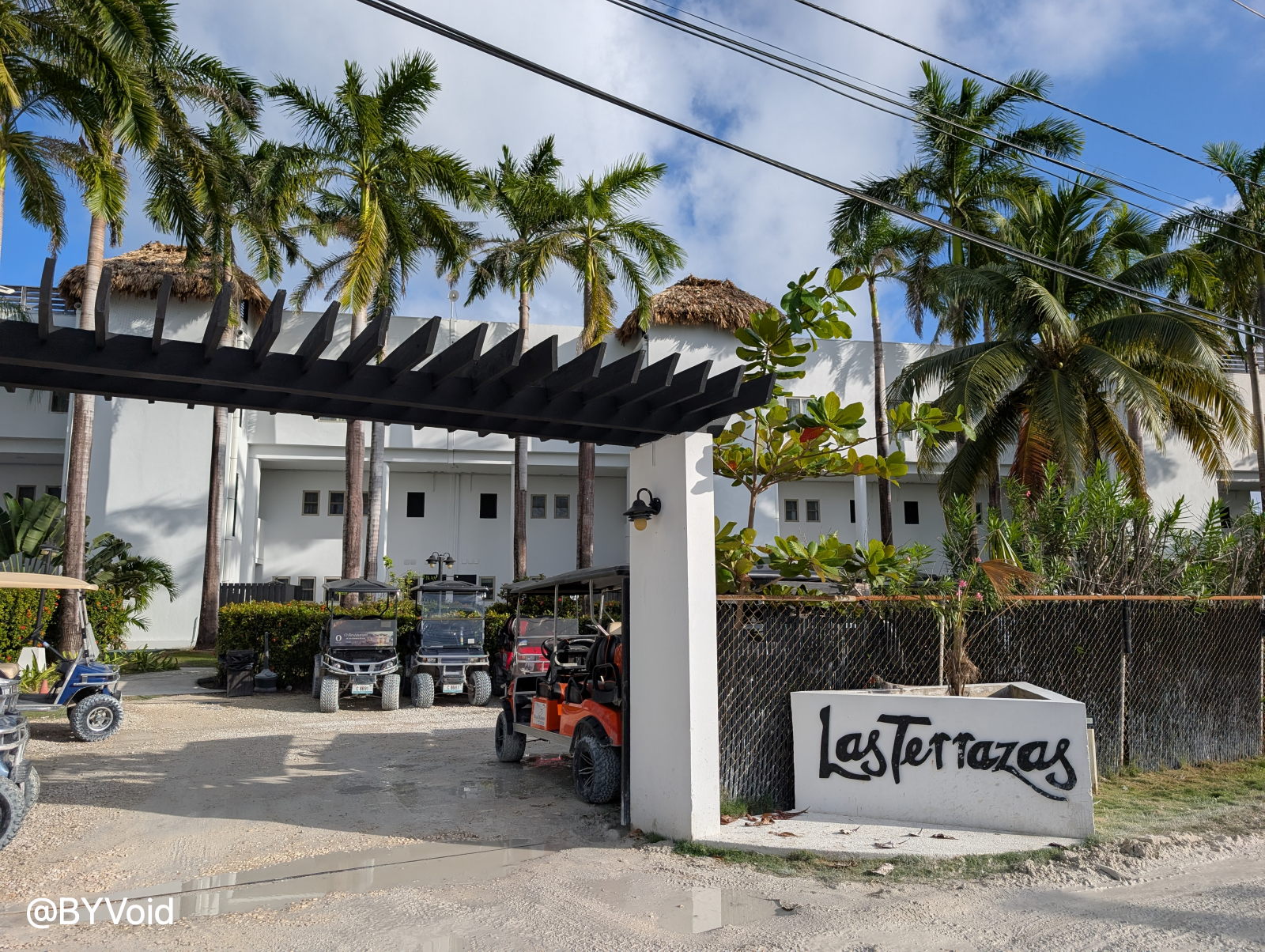
An ocean-view apartment community with many golf carts parked.
Luxury vacation villas under construction.
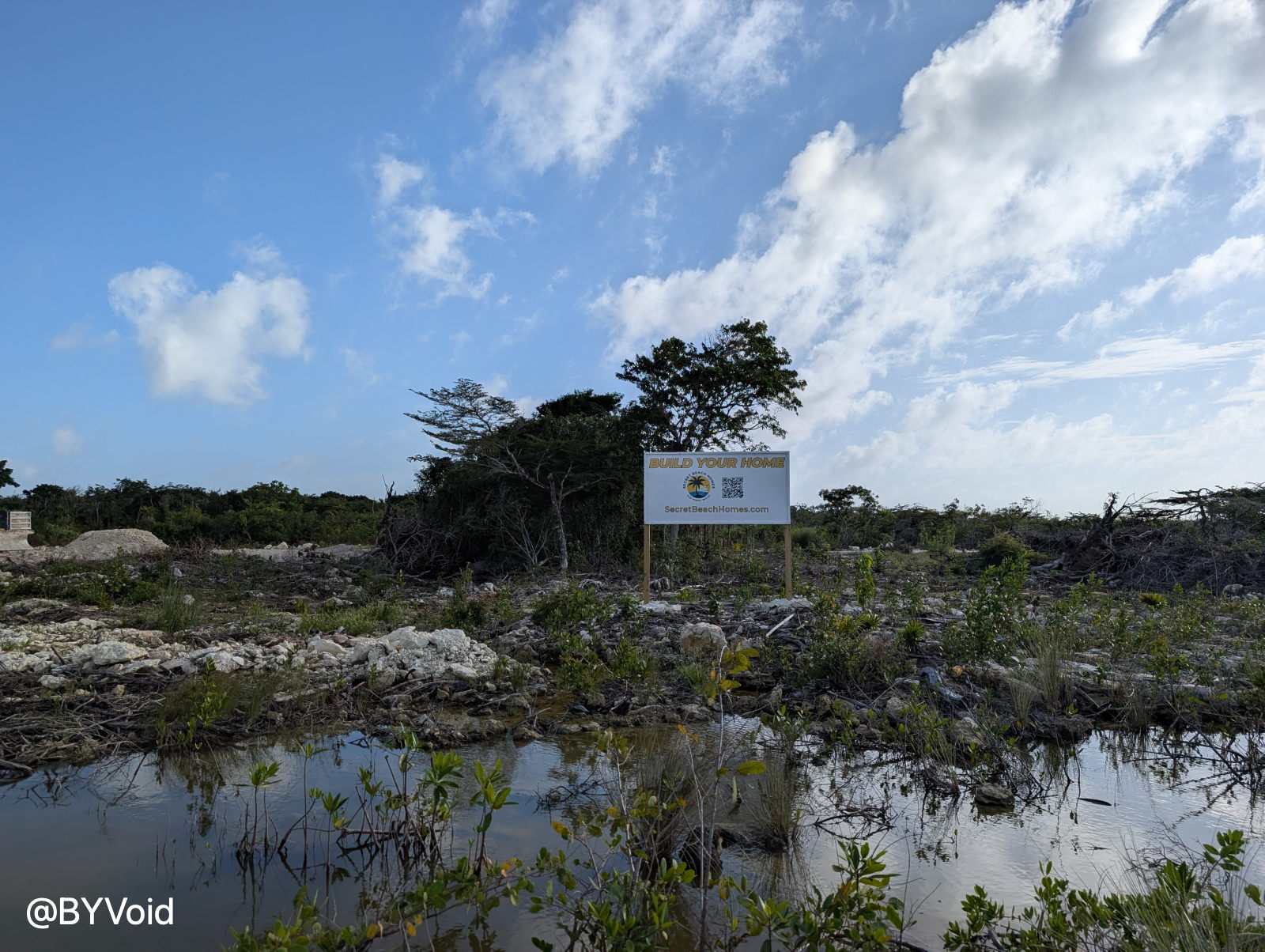
Vacant land in the marsh with a billboard saying “Build Your Home.”
San Pedro Airport
After spending a leisurely afternoon and evening in San Pedro, the next morning, I decided to take a plane to leave San Pedro for the former capital, Belize City. Although Belize’s land area is not large, apart from the scattered islands, almost the entire territory is tropical rainforest, making transportation extremely inconvenient. As a result, a specialized transportation network centered on small aircraft has developed here. Almost every small town has a small airport, making it the primary mode of travel for both locals and tourists. I flew with Maya Island Air, and surprisingly, the ticket prices were very affordable; even without booking in advance, it only cost around 50 USD.
The small airport in San Pedro is not far from the town center, reachable within a ten-minute walk. While many people choose pricey golf cart taxis that might charge 20 USD for a few minutes’ ride, I decided to walk while the morning air was still cool. Upon reaching the airport, the staff quickly processed my check-in, and I received the most rudimentary boarding pass I have ever seen.
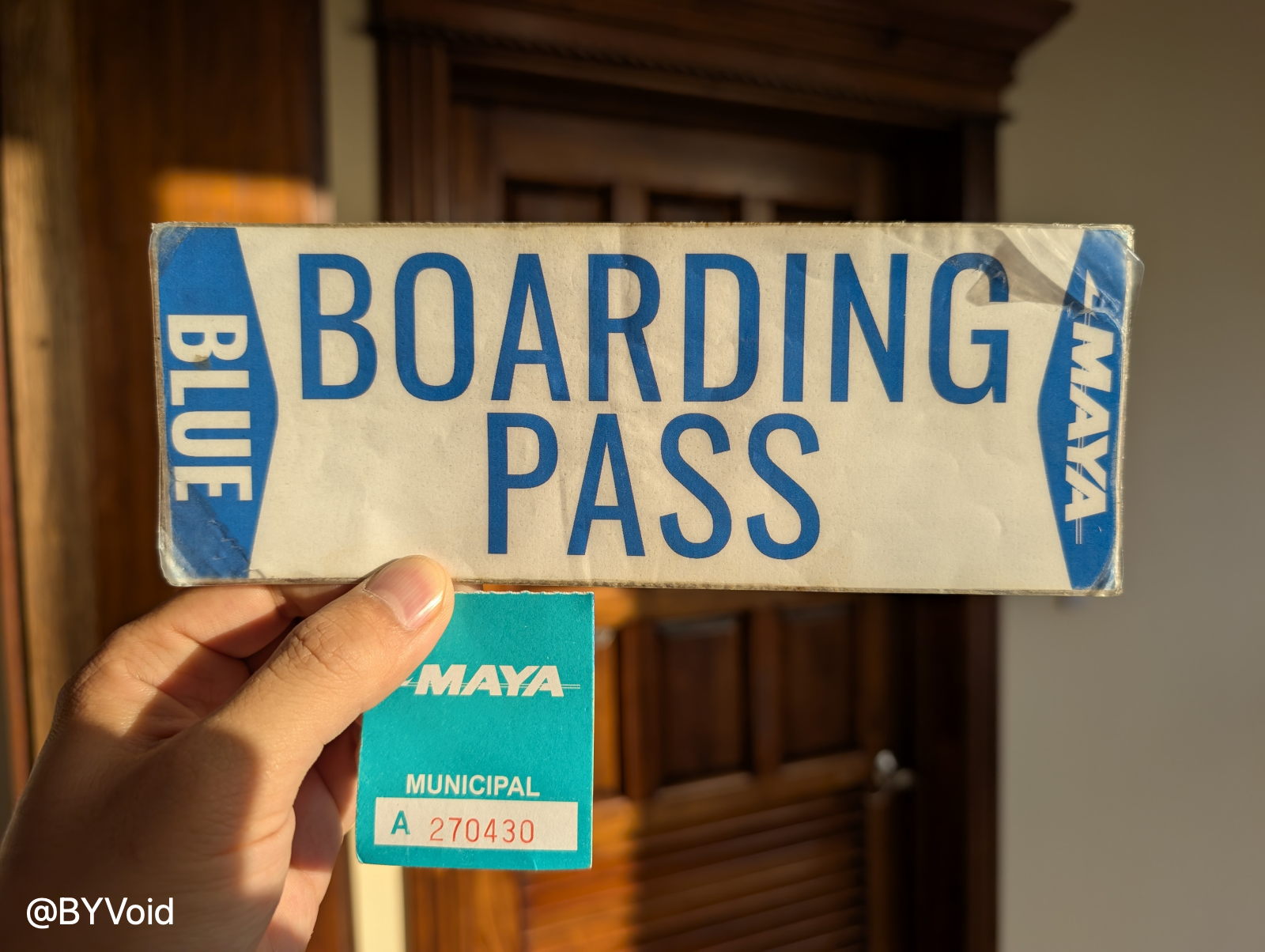
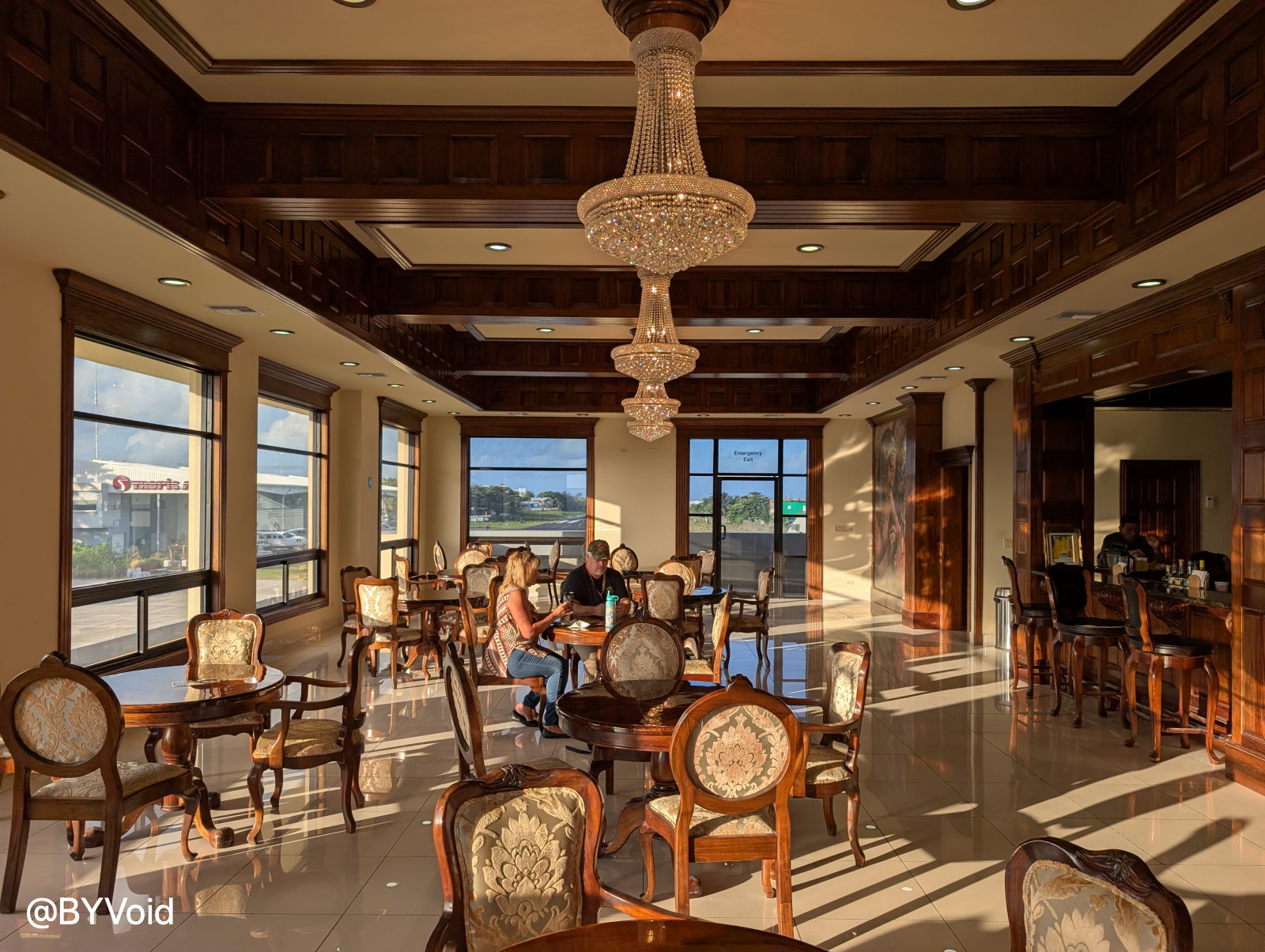
The airport terminal isn’t a traditional large airport; instead, it feels a bit like a common aero club in the US. I ordered a coffee in the second-floor lounge, where the environment was excellent and I could watch the planes outside. Despite the small size of the airport, during the ten-plus minutes I spent eating breakfast, I could see multiple small planes taking off and landing, showing that the flight density is quite high.
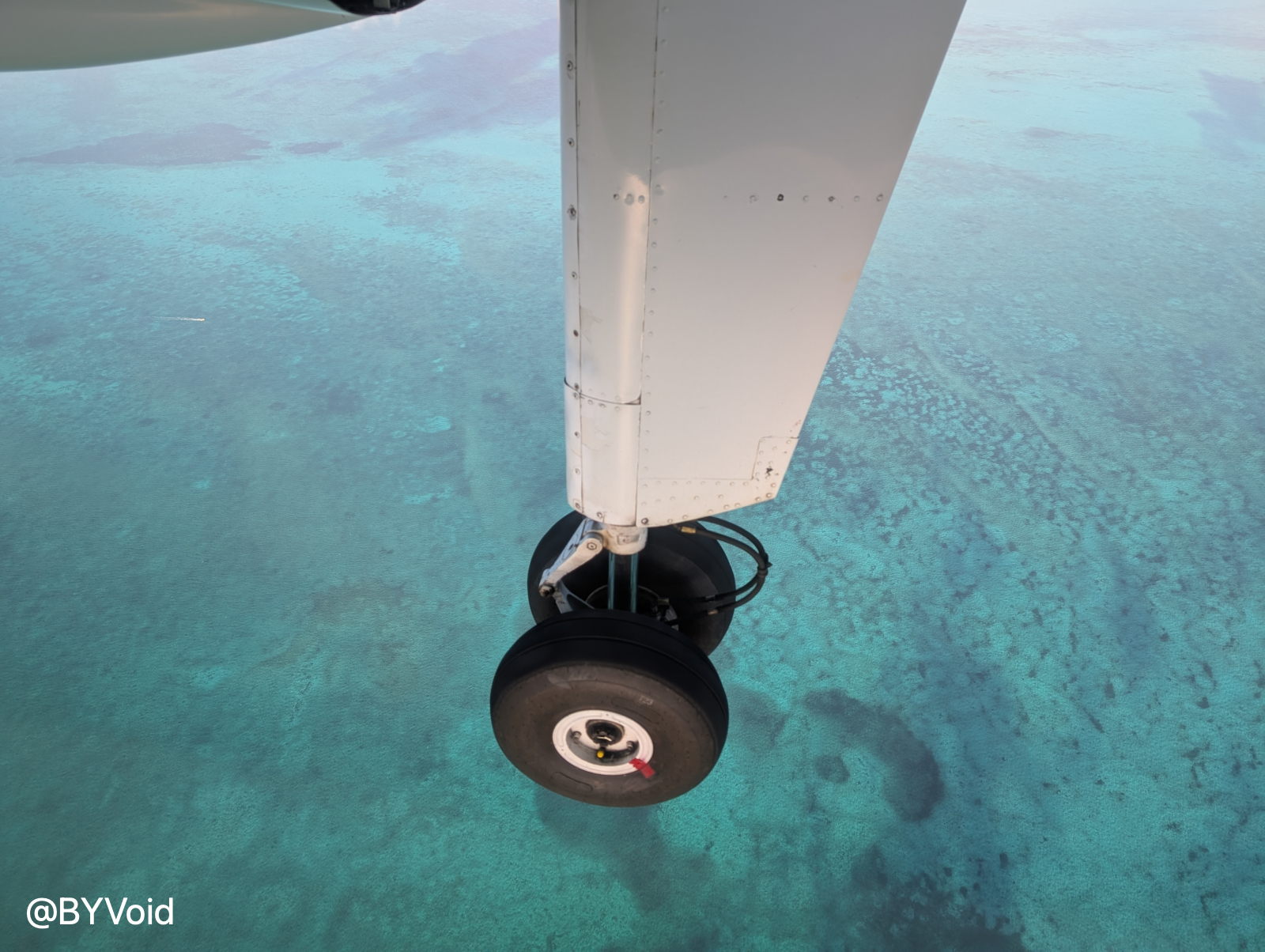
There is no security check before boarding here. After hearing the announcement, everyone was led directly onto the tarmac. The small plane I took was a British Britten-Norman BN-2, manufactured in 1983, which can seat seven or eight people.
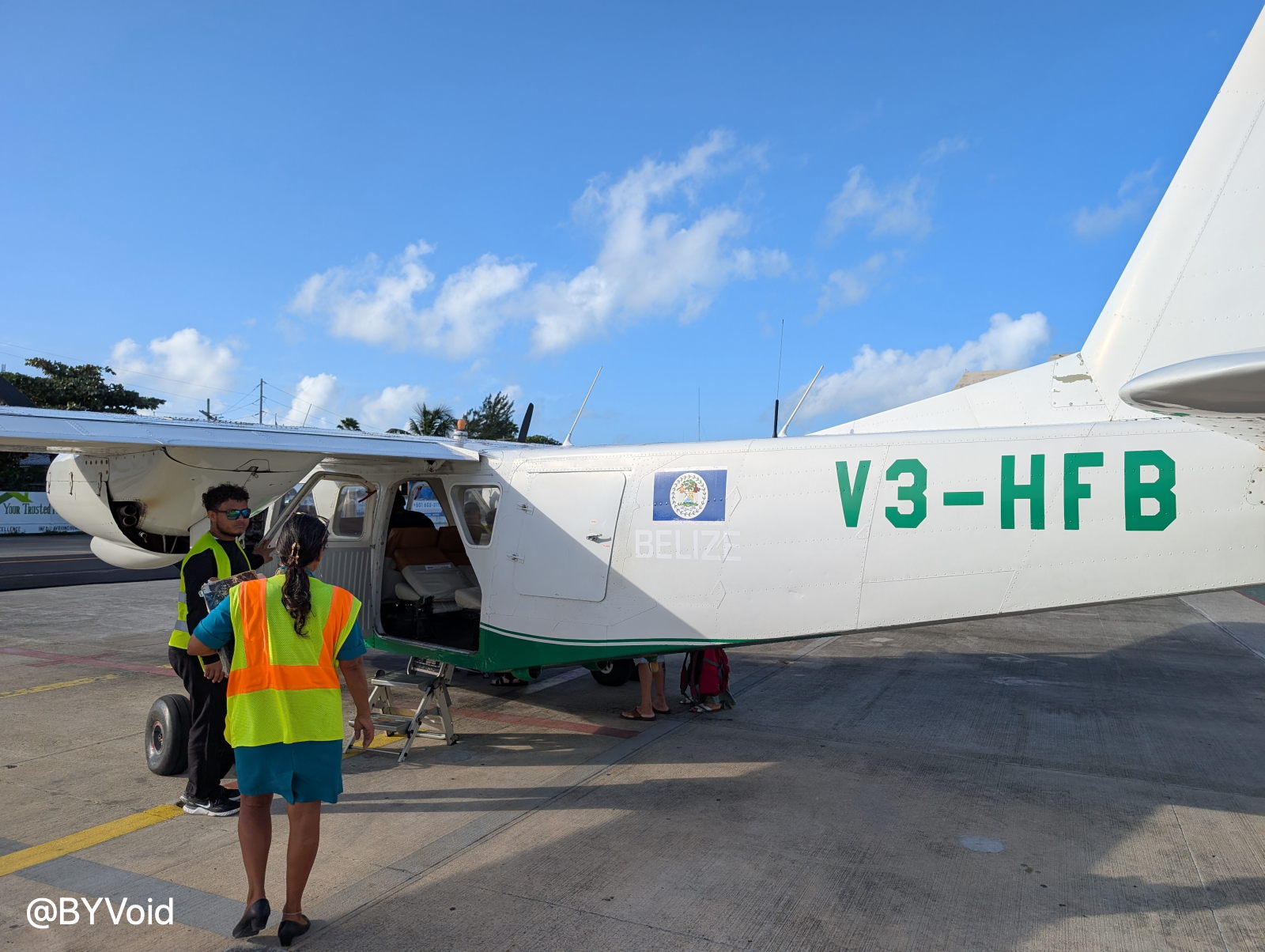
I had assumed that staff would weigh each passenger before boarding to ensure weight and balance, but in reality, they just visually estimated the weight and then manually assigned seats—simple and direct. For small aircraft, weight and balance are critical for aviation safety, and once a person’s seat is assigned, they absolutely cannot move.
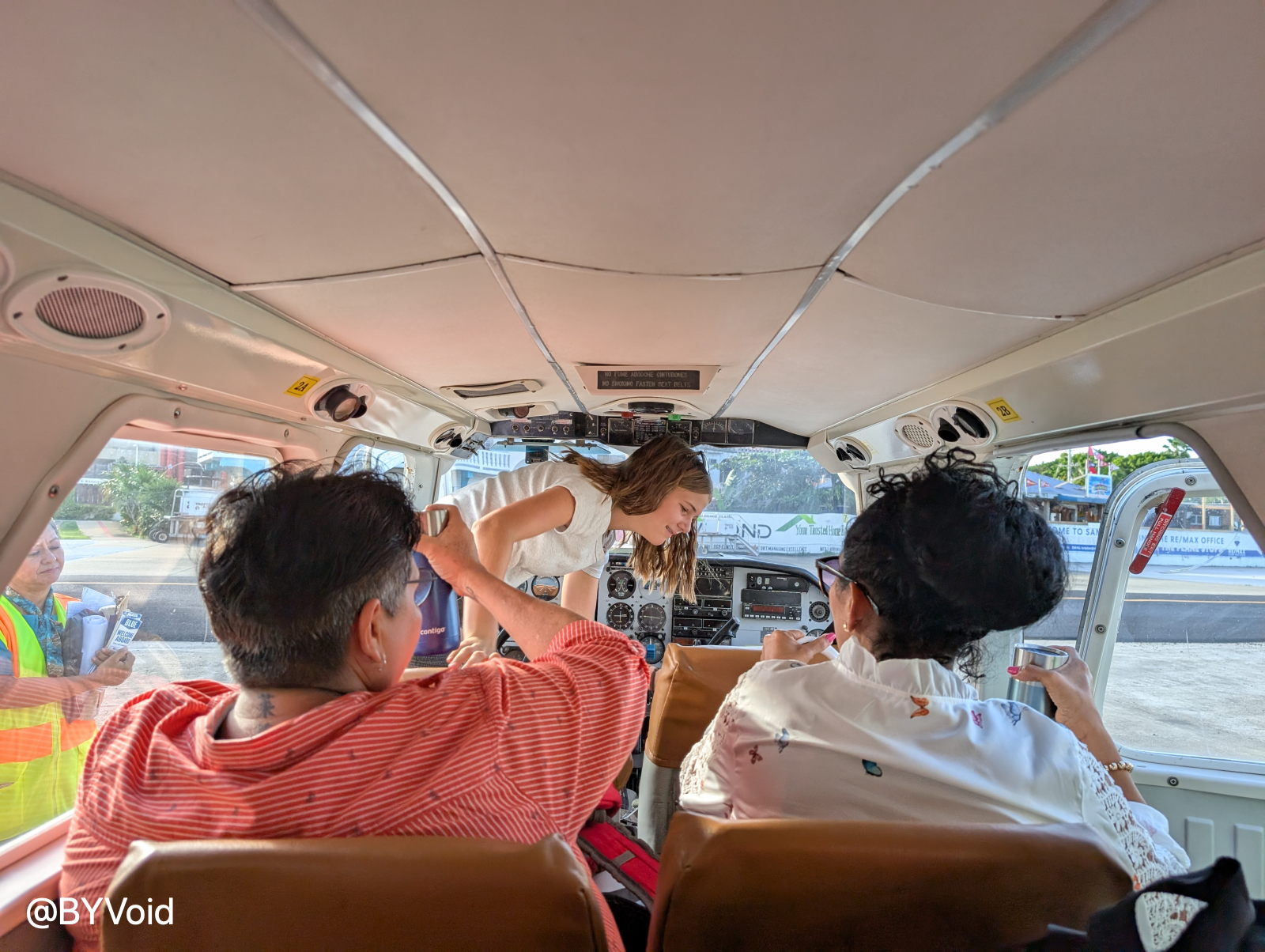
What I found incredible was that it took less than five minutes from the boarding announcement to the plane taxiing and taking off. There were no safety instructions or briefings before takeoff; almost as soon as everyone was settled, we were airborne. The pilot didn’t say a single word the entire time.
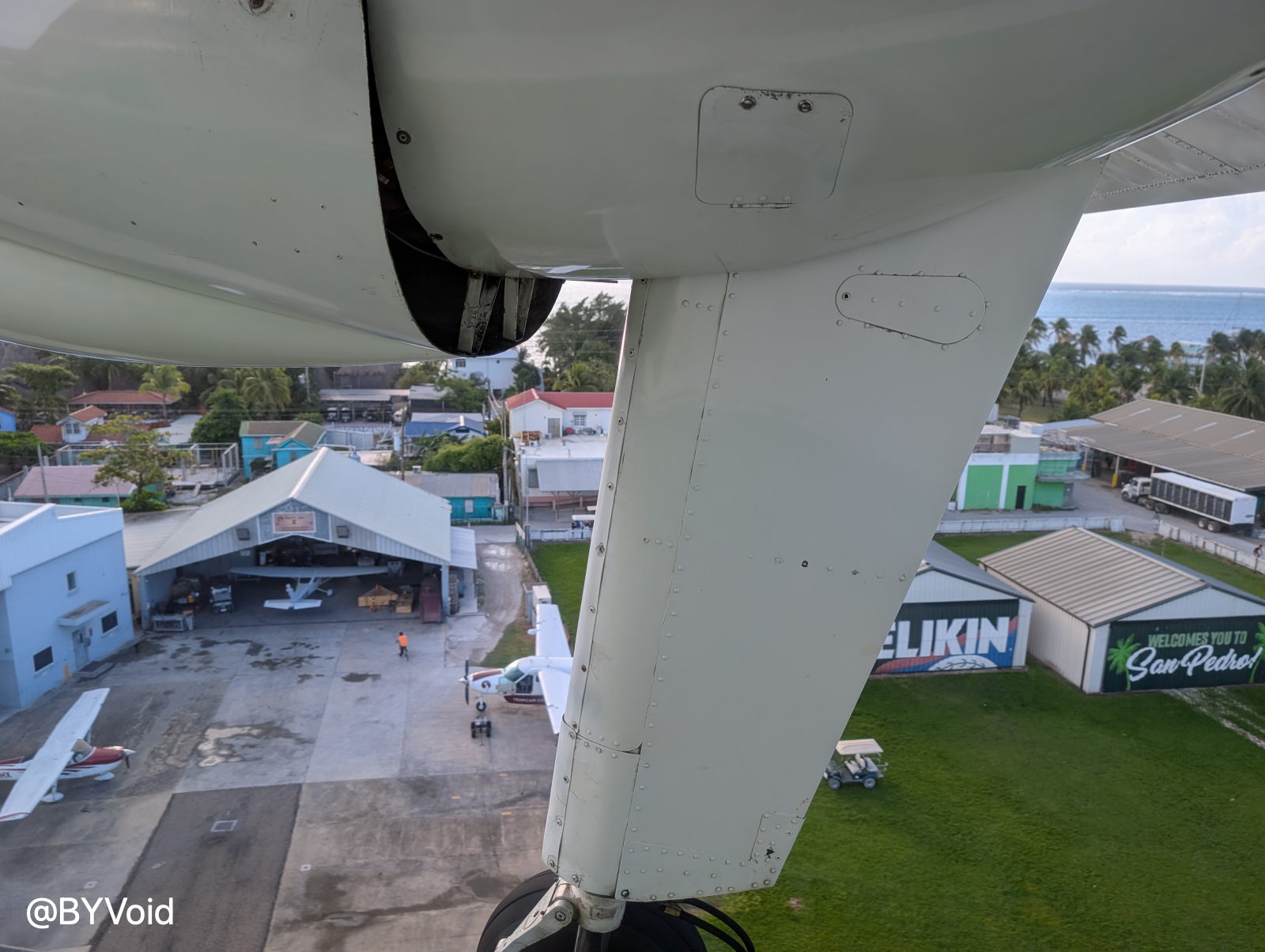
The plane’s cruising altitude wasn’t high, making it perfect for sightseeing. One of Belize’s most famous attractions is the Great Blue Hole at sea. To see the Blue Hole, one also needs to take a small plane for a tour. However, I didn’t go to the Blue Hole this time, but flew directly to Belize City Municipal Airport.
In the next post, I will share my experiences in Belize City: Central America Travelogue (5): Belize City.
Last modified on 2025-11-30